
Ghana’s Nya Gyidie discovery opens a new target for deepwater exploration
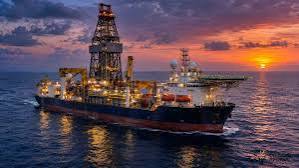
Planet One Oil & Gas has found hydrocarbons in a carbonate reservoir offshore Ghana, opening a different exploration target in a country whose producing fields were developed mainly from sandstone discoveries. The company announced the result at its Nya Gyidie-1X exploration well on 10 November. The well was drilled in the Deepwater Cape Three Points block, about 148 kilometres from shore, in 2,289 metres of water. Ghana National Petroleum Corporation said further evaluation would establish the size and commercial potential of the discovery.
Planet One reported hydrocarbons in carbonate rock between 3,364 and 3,499 metres measured along the wellbore. The interval marks the depth range over which hydrocarbons were encountered. It gives geoscientists a starting point to evaluate the reservoir, but the announcement leaves open the net productive thickness, the area covered by the accumulation and the rates a completed well could sustain. Those are among the measurements needed to estimate what could be produced commercially
The geological result is relevant beyond the well. Previous commercial discoveries in Ghana were mostly associated with sandstone. Nya Gyidie tested a Cenomanian–Turonian carbonate system as its primary objective. A successful test gives companies a reason to revisit seismic data and assess whether similar rocks occur elsewhere in the basin. Their investment decisions will depend on whether the favourable conditions at this well extend across a larger area. In water more than two kilometres deep, that distinction has a direct bearing on the cost and scope of further drilling.
Planet One operates the block alongside GOIL Upstream and state-owned GNPC. The discovery follows an October announcement by Planet One and GOIL on their farm-in and joint operating agreements. The companies now face a different set of decisions from those involved in drilling the exploration well. They must agree what further data to obtain, how to share the cost and whether the results justify commissioning development studies. GNPC has said it intends to work with the partners on that evaluation.
Ghana produced 37.3 million barrels of crude in 2025, according to the country’s Public Interest and Accountability Committee, down from about 71.4 million in 2019. Its recent production has come primarily from the Jubilee, TEN and Sankofa fields. New discoveries could help replenish the development pipeline, but appraisal, approvals and construction take time. Near-term production will continue to depend on investment and operating performance at the fields already producing.
For Nya Gyidie, the next public milestone would be an appraisal plan or further technical results. Those would begin to answer whether the discovery can support an offshore development and whether comparable prospects merit drilling. The November result establishes that the carbonate target contains hydrocarbons at this location. The economic scale remains to be determined.

Related coverage
Afentra targets January 2027 first oil from Impala-2 as Angola drilling order changes
Afentra expects first oil from Impala-2 in January 2027, with initial gross production of about 4,000 barrels a day. The well was…
Impact completes South African asset sale and concentrates its portfolio on Namibia
Impact Oil & Gas completed the sale of its South African licence-holding subsidiary on 12 November, leaving the Venus oil discovery offshore…
Mozambique’s ENH takes an offshore drilling role at Coral North
Eni and its partners have started drilling and completing development wells for Coral North, Mozambique’s second floating liquefied natural gas project. The…