
Africa's 2026 on-grid solar additions already surpass 2025 as costs fall and storage deals multiply
Africa's grid-connected solar capacity additions in 2026 have already overtaken those of the whole of 2025, according to analysis from African Energy Live Data, marking a new high for the continent's...
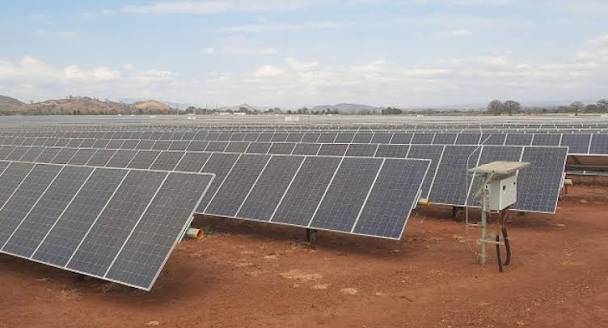
Africa's grid-connected solar capacity additions in 2026 have already overtaken those of the whole of 2025, according to analysis from African Energy Live Data, marking a new high for the continent's solar deployment after a comparatively slow previous year and signalling that a long-anticipated acceleration is underway.
The pace is captured in the early-year figures. Nearly 970 MW of utility-scale solar was installed across Africa in the first quarter of 2026 alone, exceeding the total added in all of 2025, according to figures compiled from the Africa Solar Industry Association (AFSIA) database.
Total installed solar capacity across all segments reached about 26.15 GW, with South Africa and Egypt the dominant markets and growing contributions from Morocco, Nigeria, Zambia and Namibia. AFSIA has put the continent's utility-scale project pipeline at close to 133 GW under development, though a substantial share remains early-stage without a clear path to financial close.
Two forces are driving the acceleration. The first is cost: solar module prices have fallen sharply, aided by a global oversupply of Chinese panels seeking markets, making solar the fastest and often cheapest new generation to deploy. The second is the pairing of solar with battery storage, which addresses the intermittency that long limited solar's role and allows it to provide firmer, more grid-useful power. The flagship example is in Egypt, where Norwegian developer Scatec signed a 25-year power purchase agreement in January 2026 with the Egyptian Electricity Transmission Company for 1.95 GW of solar paired with 3.9 GWh of battery storage, the largest solar-plus-storage installation ever signed in Africa and the largest investment in Scatec's history, expected to deliver around 6 TWh a year.
The market is also broadening geographically. According to the Global Solar Council (GSC), African solar installations rose 54% year-on-year in 2025, the fastest annual growth on record, with eight countries each installing more than 100 MW, double the number a year earlier. South Africa led 2025 additions at about 1.6 GW, followed by Nigeria at 803 MW, Egypt at 500 MW and Algeria at 400 MW, while mid-sized markets including Morocco, Zambia, Tunisia, Botswana, Ghana and Chad each made substantial gains, evidence of a shift away from reliance on a handful of early adopters.
A distinct and strategically important strand is the growth of solar-plus-storage for industrial and mining loads.
In the Democratic Republic of Congo, developers have been awarded baseload solar-and-storage plants to supply the Kamoa copper operations, using energy-as-a-service structures in which the developer owns and operates the system and the mine pays only for power consumed. In a country where grid access sits around 22%, delivering round-the-clock renewable power to a mine is a template that travels across the Copperbelt and to industrial loads elsewhere. South Africa's deep commercial-and-industrial contracting market, exemplified by pooled-PPA platforms selling output from utility-scale plants to multiple corporate buyers, is a parallel expression of the same trend.
The most consequential finding, however, is a discrepancy that complicates the headline numbers. The continent imported around 18.2 GW of solar modules in 2025, yet officially reported roughly 4.5 GW of new installed capacity, and under a medium scenario is projected to build only about 14.3 GW of mainly utility-scale capacity across 2026 and 2027 combined. Over four years, only about 15% of imported solar equipment has gone into large utility-scale installations.
That gap strongly suggests that a large volume of solar, in rooftop, commercial, captive and mini-grid systems, is being deployed but not captured in official capacity tables, which in weak-grid and distributed markets are lagging indicators. On this reading, the visible on-grid boom that has now surpassed 2025 may be only the trackable portion of a considerably larger, partly invisible expansion.
The trajectory nonetheless comes with a caveat that the GSC itself stresses: the next phase of growth will be shaped less by headline capacity and more by system readiness. As deployment shifts toward distributed and commercial solar, existing finance, planning and regulatory frameworks are increasingly misaligned with how the market is actually evolving, a mismatch that, left unaddressed, could slow deployment and raise system costs. Africa's solar additions have hit a new high, and the underlying momentum in imports and contracts suggests the trend has room to run. Whether the grids, storage and rules keep pace with the panels is the question the record numbers now pose.
The pace is captured in the early-year figures. Nearly 970 MW of utility-scale solar was installed across Africa in the first quarter of 2026 alone, exceeding the total added in all of 2025, according to figures compiled from the Africa Solar Industry Association (AFSIA) database.
Total installed solar capacity across all segments reached about 26.15 GW, with South Africa and Egypt the dominant markets and growing contributions from Morocco, Nigeria, Zambia and Namibia. AFSIA has put the continent's utility-scale project pipeline at close to 133 GW under development, though a substantial share remains early-stage without a clear path to financial close.
Two forces are driving the acceleration. The first is cost: solar module prices have fallen sharply, aided by a global oversupply of Chinese panels seeking markets, making solar the fastest and often cheapest new generation to deploy. The second is the pairing of solar with battery storage, which addresses the intermittency that long limited solar's role and allows it to provide firmer, more grid-useful power. The flagship example is in Egypt, where Norwegian developer Scatec signed a 25-year power purchase agreement in January 2026 with the Egyptian Electricity Transmission Company for 1.95 GW of solar paired with 3.9 GWh of battery storage, the largest solar-plus-storage installation ever signed in Africa and the largest investment in Scatec's history, expected to deliver around 6 TWh a year.
The market is also broadening geographically. According to the Global Solar Council (GSC), African solar installations rose 54% year-on-year in 2025, the fastest annual growth on record, with eight countries each installing more than 100 MW, double the number a year earlier. South Africa led 2025 additions at about 1.6 GW, followed by Nigeria at 803 MW, Egypt at 500 MW and Algeria at 400 MW, while mid-sized markets including Morocco, Zambia, Tunisia, Botswana, Ghana and Chad each made substantial gains, evidence of a shift away from reliance on a handful of early adopters.
A distinct and strategically important strand is the growth of solar-plus-storage for industrial and mining loads.
In the Democratic Republic of Congo, developers have been awarded baseload solar-and-storage plants to supply the Kamoa copper operations, using energy-as-a-service structures in which the developer owns and operates the system and the mine pays only for power consumed. In a country where grid access sits around 22%, delivering round-the-clock renewable power to a mine is a template that travels across the Copperbelt and to industrial loads elsewhere. South Africa's deep commercial-and-industrial contracting market, exemplified by pooled-PPA platforms selling output from utility-scale plants to multiple corporate buyers, is a parallel expression of the same trend.
The most consequential finding, however, is a discrepancy that complicates the headline numbers. The continent imported around 18.2 GW of solar modules in 2025, yet officially reported roughly 4.5 GW of new installed capacity, and under a medium scenario is projected to build only about 14.3 GW of mainly utility-scale capacity across 2026 and 2027 combined. Over four years, only about 15% of imported solar equipment has gone into large utility-scale installations.
That gap strongly suggests that a large volume of solar, in rooftop, commercial, captive and mini-grid systems, is being deployed but not captured in official capacity tables, which in weak-grid and distributed markets are lagging indicators. On this reading, the visible on-grid boom that has now surpassed 2025 may be only the trackable portion of a considerably larger, partly invisible expansion.
The trajectory nonetheless comes with a caveat that the GSC itself stresses: the next phase of growth will be shaped less by headline capacity and more by system readiness. As deployment shifts toward distributed and commercial solar, existing finance, planning and regulatory frameworks are increasingly misaligned with how the market is actually evolving, a mismatch that, left unaddressed, could slow deployment and raise system costs. Africa's solar additions have hit a new high, and the underlying momentum in imports and contracts suggests the trend has room to run. Whether the grids, storage and rules keep pace with the panels is the question the record numbers now pose.